Stop looking at Africa through the old lens. The narrative used to be simple: get a degree, get a job, or leave the country. That story is dead. We are witnessing a massive shift in how the continent builds its workforce. It’s not happening in dusty lecture halls. It’s happening in the digital trenches.
A new infrastructure is being built. It’s faster, smarter, and ruthless in its efficiency. We are talking about fellowships that place young tech stars inside government halls. Creator schools that turn TikTok views into business empires. Operator guilds that are stitching together markets across borders.
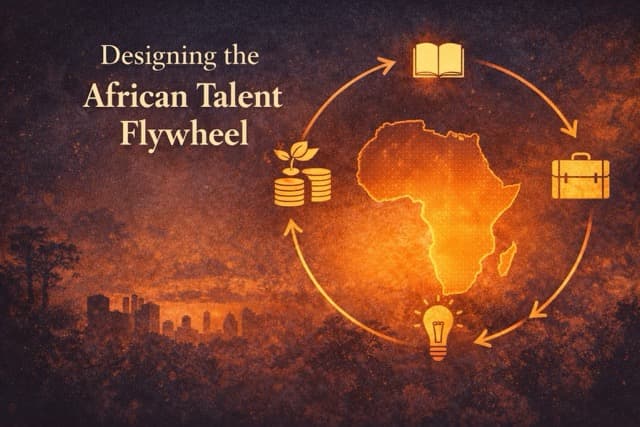
Together, they are building a talent flywheel. And it’s spinning faster than anything traditional education can muster.
The Numbers Don’t Lie
The demand for talent is insane. Africa needs 4.5 million skilled developers by 2025. Nigeria alone needs 28 million digitally-skilled workers by 2030. Here is the paradox: African startups raised $2.21 billion in 2024. That’s a lot of cash. But 40% of CEOs say they can’t grow because they can’t find the right people. The universities are failing to keep up. The solution isn't more theory. It’s practical, on-the-ground execution.
Forget internships where you fetch coffee. The new breed of fellowships is about leverage. Look at the African Union Digital and Innovation Fellowship. It’s a masterclass in access. They place tech innovators directly inside the AU headquarters in Addis Ababa for a year. These fellows aren’t reading about policy; they are rewriting it. They are debugging the bureaucracy from the inside out. This is happening everywhere. Agripro Fellowship raising young ambitious agribusiness leaders from across Africa to tackle agribusiness problems with aggressive innovative solutions. Crowdpen's Pathfinders Fellowship helping creators earn from their craft. The Tony Elumelu Foundation has empowered over 9,000 entrepreneurs across all 54 countries. The Women Techsters Fellowship is an exclusive club—only the top 3% get in and it grinds them down with technical training and business incubation.
If you aren't building a personal brand, you are falling behind. Africa’s creative economy is exploding. But raw talent isn't enough; you need infrastructure. That’s where creator schools come in. Eki Technologies, backed by heavy hitters like the Gates Foundation, is teaching creators how to actually make money. Not just likes. Revenue. The Creator School Africa is fixing the skills gap. They teach filmmaking, digital art, and the boring but essential stuff: business management. Here is the reality: four out of ten African software developers already work for companies outside the continent. They earn foreign currency and live like kings. Creator schools are applying this same logic to content. Train for the local context, monetize for the global audience. They are teaching ownership. Web3, tokenization, DAOs. This is the future of work for the creative class.
You can’t do it alone. You need a network. Operator guilds are the glue holding this ecosystem together. When international investors pulled back, Accelerate Africa stepped up. Founded by Iyinoluwa Aboyeji in 2024, this eight-week program helps founders refine their products and get investor-ready. It’s a guild. A community of practice where knowledge is shared freely. Katapult Africa and The Baobab Network are doing the same thing. They don’t just write checks; they plug startups into a network. This is why African startups expanded into 38 new markets in 2024—double the previous year. Operators are helping operators navigate currency hedging and regulations. Even the investors need training. Dream VC runs a fellowship to train the next generation of fund managers. The flywheel has to be funded, after all.
The Flywheel is Spinning
Here is why this matters. It’s not about one single program. It’s about the loop. A fellowship alum joins an accelerator. A creator school grad builds a startup. An operator guild member funds them. They hire the next batch of fellows. The flywheel feeds itself. Africa isn’t trying to catch up to the West anymore. It’s building a parallel system optimized for speed. The traditional university model will always have a place, but the future belongs to the operators, the creators, and the ecosystem builders. They understand a simple truth: Talent development is infrastructure. And infrastructure is destiny. Get on the flywheel, or get left behind.